
Written by Poonam Pankhania, Superintendent Pharmacist & Independent Prescriber
Medically reviewed by Poonam Pankhania, Superintendent Pharmacist & Independent Prescriber (GPhC 2068026) — last reviewed 9 November 2026
8 min read
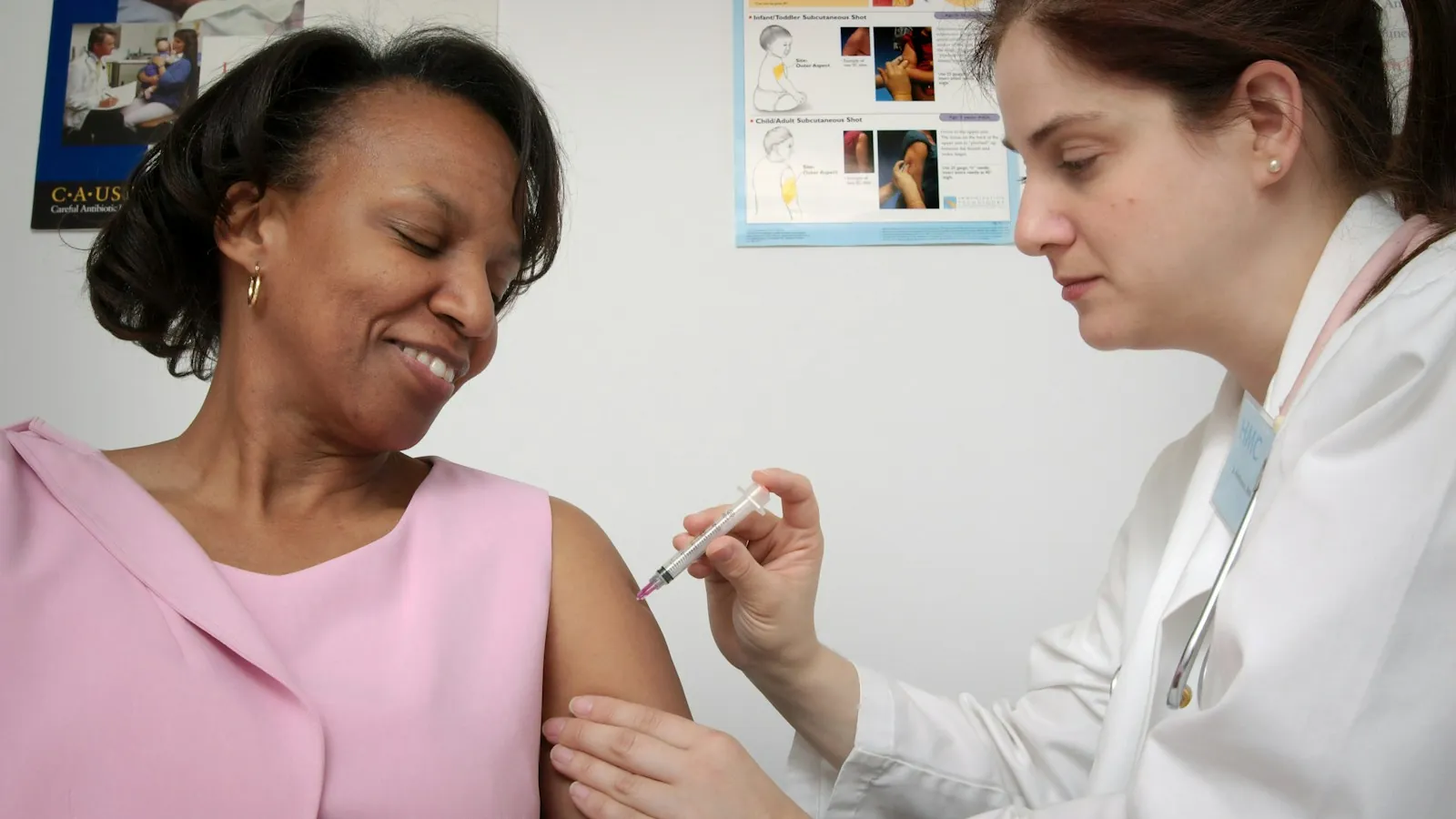
Should adults get the chickenpox vaccine? If you have never had chickenpox, it is worth considering, because the illness is usually more severe in adults than in children. The chickenpox vaccine for adults is two doses, usually four to eight weeks apart. Most adults pay privately, as the NHS offers it only to certain close contacts and health workers.
This guide explains who the vaccine is for, what changed on the NHS in January 2026, how the two doses work, who should not have it, and what to expect afterwards. It is written by the pharmacist team at Garner Chemist on Pinner Road, where we vaccinate adults and older children against chickenpox.
Who the chickenpox vaccine for adults is for
Chickenpox is caused by the varicella zoster virus. Most people in the UK catch it as young children, have an itchy, spotty week off nursery or school, and are then immune for life. A small number of adults reach their twenties, thirties or later without ever having had it, and they are the people the vaccine is really for.
The adults we most often see for it fall into a few groups:
- People who grew up outside the UK and are not sure they had chickenpox as a child. Many of the adults we vaccinate fall into this group.
- Parents of young children who never had chickenpox themselves and do not want to catch it when it inevitably comes home from nursery.
- Women planning a pregnancy who know or suspect they are not immune. The vaccine cannot be given during pregnancy, so it has to be done beforehand.
- People who work with children or in care settings, where exposure is frequent.
- Adults who simply do not know whether they had it. If your family cannot remember either way, talk it through with us before deciding.
If you clearly remember having chickenpox, or a parent does, you do not need the vaccine. A past infection gives lasting protection against catching chickenpox again.
Why chickenpox is worse in adults
In young children chickenpox is usually a mild illness that settles on its own within one to two weeks. In adults it tends to be more unpleasant and more likely to cause problems. The UK Health Security Agency notes that the disease is more severe in adults than in children, with possible complications including pneumonia, hepatitis and encephalitis.
There is also the practical side. The NHS chickenpox guidance says you are infectious from two days before the spots appear until they have all crusted over, usually about five days after they first appeared, and you should stay off work until then. For an adult that often means a week or more away from work, and keeping well away from newborn babies, anyone who is pregnant and anyone with a weakened immune system, for whom chickenpox can be dangerous.
Pregnant and been near someone with chickenpox?
If you are pregnant, or have a weakened immune system, and you have been near someone with chickenpox and are not sure you are immune, contact NHS 111 or your GP urgently. Some people can be given treatment to reduce the risk of complications, but it works best when it is started early.
What changed on the NHS in January 2026
For years the UK was unusual in not vaccinating children against chickenpox. That changed on 1 January 2026, when chickenpox was added to the routine childhood immunisation schedule. It is given as part of the combined MMRV vaccine, which protects against measles, mumps, rubella and varicella, at 12 months and 18 months. Children born on or after 1 January 2020 are also being offered one or two doses to catch up.
That is good news for the next generation, but it does not cover adults, teenagers or older children born before 2020. For them, the NHS only offers the chickenpox vaccine in specific circumstances, which is why most adults who want it have it privately.
Who can get it free on the NHS
The NHS chickenpox vaccine page sets out two adult routes:
- Close contacts of someone at higher risk. If you are healthy, aged nine months or over, have never had chickenpox, and are in regular or close contact with someone whose immune system is weakened, for example a child with leukaemia or an adult having chemotherapy, you can be vaccinated on the NHS. The idea is to stop you bringing the virus home to them. Ask the GP or the specialist team looking after that person.
- Health and care workers. If your work involves close contact with patients and you are not immune, your employer's occupational health service may recommend the vaccine. That includes clinical roles and others such as receptionists, cleaners and catering staff on wards.
If neither applies to you, you can still be vaccinated, but you will need to pay for it at a pharmacy or private clinic.
| NHS (eligible groups) | Private (pharmacy) | |
|---|---|---|
| Who it is for | Healthy close contacts of someone with a weakened immune system; some health and care workers | Anyone aged nine months or over who is not immune and has no reason not to have it |
| Where | GP practice, hospital team or occupational health | Pharmacy or private clinic |
| Number of doses | Two | Two |
| Usual gap between doses | Four to eight weeks | Four to eight weeks |
| Cost | Free | Paid; ask the pharmacy for current pricing |
| Routine for young children? | Yes, as MMRV at 12 and 18 months since January 2026 | Not needed if on the NHS schedule |
How the two doses work
The chickenpox vaccine is a course of two injections, usually given in the upper arm. The NHS advises that the two doses are given four to eight weeks apart; four weeks is the minimum. You do not need a booster afterwards.
Two doses matter. According to the NHS, a full course gives around 98% protection in children and about 75% protection in adults. That lower figure for adults is one reason to complete both doses rather than stopping after the first. If someone who has been vaccinated does catch chickenpox, it is usually much milder.
If you also need an MMR vaccine, for example before starting university or a job in healthcare, the two can be given on the same day. Otherwise there needs to be a four-week gap between them. Tell us about any other vaccines you have had or are planning, including travel vaccines, so we can fit them together sensibly.
Who should not have the vaccine
The chickenpox vaccine is a live vaccine, which means it contains a weakened form of the virus. That is why it works so well, and also why it is not suitable for everyone. The NHS says it is not recommended for:
- People with a weakened immune system, because of a condition such as HIV or a treatment such as chemotherapy
- Anyone who is pregnant. You should also avoid getting pregnant for one month after the last dose
- Babies under nine months
- Anyone who has had a serious allergic reaction to a previous dose or to an ingredient, including neomycin or gelatin
- Anyone who had an MMR vaccine in the past four weeks, or is due one in the next four
If you have a high temperature or feel unwell on the day, we will usually postpone. Before vaccinating, the pharmacist goes through your health, medicines and allergies in our private consultation room, so you do not need to work out your own suitability in advance.
Chickenpox vaccine side effects
Most people have no problems at all, or only mild ones that pass within a few days. The common chickenpox vaccine side effects listed by the NHS are:
- Soreness, redness or swelling where the injection was given
- A raised temperature
- A mild rash, which can appear at any point within about a month of the vaccine, sometimes near the injection site and sometimes elsewhere
If you get a rash after the vaccine, cover it if you can and avoid close contact with anyone pregnant, newborn or with a weakened immune system until it has scabbed over. Health workers should tell their employer, as they may be asked to avoid patient contact until then. Serious allergic reactions are very rare, and the team vaccinating you is trained to deal with them straight away.
For a sore arm or a temperature, paracetamol is the usual choice. If you are not sure what is safe to take with your other medicines, ask us. Our guide to starting a new medicine covers how to tell an expected effect from one that needs checking.
Planning around pregnancy, work and travel
Because it is a two-dose course and the second dose comes at least four weeks after the first, the chickenpox vaccine needs a little planning:
- Before trying for a baby: allow for both doses plus one month afterwards before you try to conceive. If you are already pregnant and not immune, the vaccine has to wait until after the birth.
- Before a new job in healthcare, childcare or teaching, start early enough that both doses are done before you begin.
- Before travelling, especially if you will be spending time with young children, fit it in alongside any travel vaccines. Our travel vaccinations checklist explains the usual timings, and our travel clinic can plan everything in one appointment.
Getting the chickenpox vaccine in Harrow
At Garner Chemist we offer the chickenpox vaccine to adults and children from nine months who are not eligible on the NHS or who would rather not wait. Appointments take place in our private consultation room at 160 Pinner Road, between North Harrow and Harrow town centre and a short bus ride from Rayners Lane and Pinner. We book the second dose before you leave, so the course is completed on time, and give you a written record of both doses.
If you are not sure whether you need it, or whether you qualify for a free NHS dose through a family member's care team or your employer, ask at the counter or call us first. Pricing can change, so please contact us for current pricing before you book. You can read more about what we offer beyond vaccinations in our guide to what services a pharmacy can provide, and full details of this service are on our chickenpox vaccination page.
Chickenpox information in this guide was checked against nhs.uk on 4 November 2026. NHS eligibility can change, so the NHS website is always the final word.
Frequently asked questions
Where our patients travel from
We are at 160 Pinner Road, Harrow HA1 4JJ. Patients come to us for chickenpox vaccine for adults from across north-west London and the surrounding HA postcodes:
- North Harrow (HA1, HA2) — on Pinner Road between North Harrow and Harrow town centre. Near North Harrow station and Pinner Road.
- Harrow town centre (HA1) — about a 15-minute walk or a short bus ride from Harrow town centre. Near St Ann's Shopping Centre and St George's Shopping Centre.
- Rayners Lane (HA2, HA5) — around 10 minutes from Rayners Lane. Near Rayners Lane station and Alexandra Avenue.
- Pinner (HA5) — straight down Pinner Road from Pinner, roughly a 10-minute drive. Near Pinner station and Pinner High Street.
About the author
Poonam Pankhania — Superintendent Pharmacist & Independent Prescriber
Poonam Pankhania is the Superintendent Pharmacist at Garner Chemist on Pinner Road, Harrow, and an independent prescriber. She leads the pharmacy's NHS Pharmacy First, travel health and ear care services.
More about our teamRelated health advice

Travel Vaccinations Checklist: Which Vaccines Do You Need, By Destination
A destination-by-destination checklist of which travel vaccines you need, how far ahead to book, and which are free on the NHS.

What Services Can a Pharmacy Provide? NHS and Private Services Explained
Pharmacy services come in layers: what every NHS pharmacy must do, the free NHS clinical services most sign up to, and the private services they charge for. Here is what sits in each.