
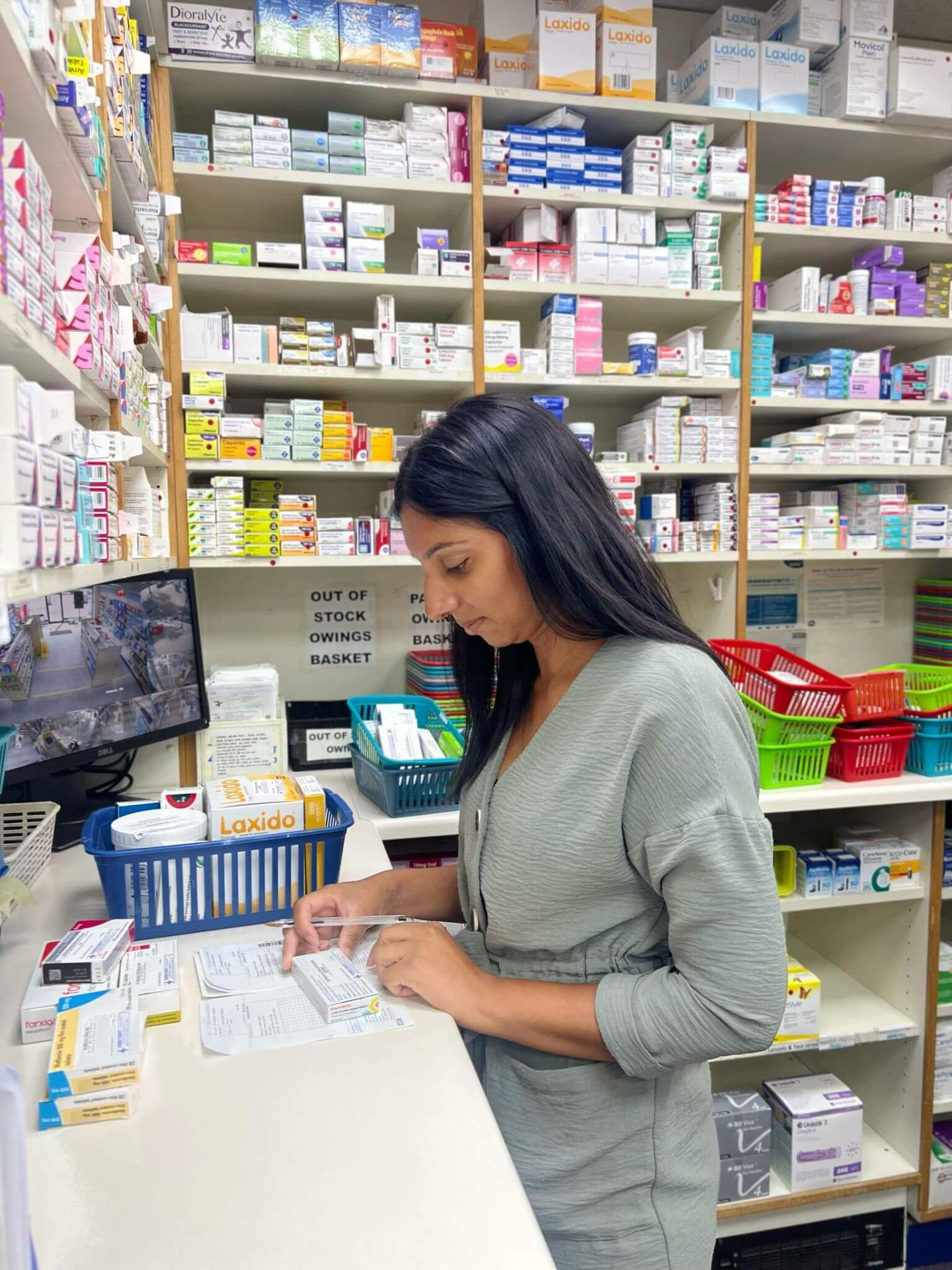
Written by Poonam Pankhania, Superintendent Pharmacist & Independent Prescriber
Medically reviewed by Poonam Pankhania, Superintendent Pharmacist & Independent Prescriber (GPhC 2068026) — last reviewed 28 July 2026
10 min read
The travel vaccines required for your trip depend on where you are going, which areas you will visit, how long you are staying, the time of year, what you will be doing and your own medical history. Some are needed by law for entry. Most are recommended to protect your health rather than legally demanded.
When to book your travel vaccination appointment
The single most common problem we see at the counter is people leaving it late. Some vaccines are a course of two or three doses spread over several weeks, and almost all of them need time after the last dose before your protection is at its best. If you book early you get the full course, the right spacing and a calmer conversation. If you book late, we may have to compress the schedule or leave something out.
The NHS and the National Travel Health Network and Centre, which is the UK reference service for country advice, both say you should seek travel health advice at least four to six weeks before you go. In practice we suggest allowing six to eight weeks where you can, because that leaves room for a multi-dose course, a follow-up appointment, and any onward referral you might need for something we cannot give here.
Left it late? Still come and see us
Official guidance is to get advice at least four to six weeks before you travel, and six to eight weeks is more comfortable if a course of doses is involved. But a short notice appointment is still worth having. Many vaccines give useful protection after a single dose, we can often start a course and finish it after you return, and we can still sort out antimalarial tablets, bite avoidance and a sensible travel health kit. Even a few days before departure, an appointment is better than nothing.
If your trip is more than a few months away, that is not too early either. It is often easier to fit doses around work and school in the quieter months than in the fortnight before a summer flight. You can read more about how we run these appointments on our travel clinic page.
Travel vaccines required, destination by destination
The table below sets out the pattern we see most often for the destinations our Harrow customers travel to. It is written to reflect real trips: family visits to India and Pakistan, pilgrimage to Saudi Arabia, holidays across Thailand and Southeast Asia, safari and beach trips to Kenya and Tanzania, and longer journeys through South America. Use it to get a feel for what may come up, not as a prescription.
| Destination | Commonly recommended | Sometimes advised |
|---|---|---|
| India and Pakistan | Hepatitis A, typhoid, and an up-to-date tetanus, diphtheria and polio booster | Hepatitis B, rabies, Japanese encephalitis for rural or long stays, cholera in outbreak areas. Longer stays in Pakistan can also involve a polio certificate on exit |
| Saudi Arabia (Hajj and Umrah) | Meningitis ACWY, which Saudi Arabia requires proof of, plus routine UK vaccines kept up to date | Hepatitis A, typhoid, hepatitis B, seasonal flu and COVID-19 depending on your age, health and the season |
| Thailand and Southeast Asia | Hepatitis A, typhoid, and an up-to-date tetanus, diphtheria and polio booster | Hepatitis B, rabies, Japanese encephalitis for rural or longer trips, cholera for higher risk work or travel |
| East Africa (Kenya and Tanzania) | Hepatitis A, typhoid, tetanus, diphtheria and polio, plus antimalarial tablets for most areas | Yellow fever depending on the exact regions and your route, rabies, hepatitis B, meningitis ACWY, cholera |
| South America | Hepatitis A, typhoid, and an up-to-date tetanus, diphtheria and polio booster | Yellow fever for many lowland and Amazon areas, rabies, hepatitis B, and antimalarial tablets for some regions |
Please treat this as general guidance only. Every itinerary needs an individual risk assessment. Two people flying to the same airport on the same day can need completely different advice, because one is staying in a city hotel for four nights and the other is spending six weeks with family in a rural district. Your age, pregnancy, medical conditions, medicines and immune system all change the answer too. We check the current country-by-country advice from TravelHealthPro for your specific destinations at every appointment, because outbreaks and entry requirements change through the year.
A special word about Hajj vaccinations, because they work differently from everything else on this list. Saudi Arabia requires all Hajj and Umrah pilgrims to show proof of a quadrivalent meningococcal ACWY vaccine given at least ten days before arrival. If the conjugate vaccine was used, it counts for five years. If the older polysaccharide vaccine was used, or if the record does not say which type you had, it counts for three years. The certificate needs to show the vaccine name and be properly authenticated, so bring any previous record with you rather than relying on memory. Saudi Arabia updates its requirements every year, so we check them again each season.
Which travel vaccines are free on the NHS
Not every travel vaccine costs money. A handful are funded by the NHS because they protect public health here as well as protecting you abroad. The rest are private, which means there is a charge for the vaccine and the appointment. The table below shows how the main ones usually fall.
| Vaccine | Usually free on the NHS? | Notes |
|---|---|---|
| Hepatitis A | Yes | Listed by the NHS as free after a travel risk assessment. Often given as a combined vaccine with typhoid |
| Typhoid | Yes | Free on the NHS. Available as an injection or, for some people, an oral course |
| Cholera | Yes | Free on the NHS, but only advised for a small group of travellers such as aid workers or people heading to outbreak areas |
| Tetanus, diphtheria and polio booster | Yes | The NHS covers polio as part of the combined Td/IPV booster. Usually advised if your last dose was more than ten years ago |
| Hepatitis B | No, usually private | Often advised for longer stays, healthcare work, medical or dental treatment abroad, or where sexual health risk applies |
| Meningitis ACWY | No, usually private for travel | Required by Saudi Arabia for Hajj and Umrah pilgrims. Teenagers and some students get it free through the routine UK programme |
| Rabies | No, private | A course of doses. Advised for remote areas, animal work, cycling and longer trips. Ask us what we can offer |
| Japanese encephalitis | No, private | A two-dose course. Mainly for rural or long stays in parts of Asia. Ask us what we can offer |
| Tick-borne encephalitis | No, private | For hiking, camping and forest activity in parts of Europe and Asia |
| Yellow fever | No, private | Only available from a registered Yellow Fever Vaccination Centre, which also issues the official certificate |
For anything private, please contact us for current pricing rather than relying on a figure you have seen elsewhere, as costs vary between vaccines and between the number of doses you need.
The full NHS list is set out in the NHS travel vaccinations guidance, which is worth a read before your appointment. It is also worth remembering that travel is a good moment to catch up on vaccines you are entitled to at home. If your trip falls in the autumn or winter and you are in an eligible group, our flu vaccination service is a sensible thing to sort out at the same time, because long flights and crowded airports are exactly where flu spreads.
Yellow fever and the certificate rules
Yellow fever is different from every other travel vaccine because it comes with an official document, the International Certificate of Vaccination or Prophylaxis, which becomes valid ten days after your first dose and is now valid for life. It can only be given at a registered Yellow Fever Vaccination Centre, and whether you need it depends on your whole route, because countries with no yellow fever of their own can still ask for a certificate if you have transited a risk country.
Because the rules are fiddly and easy to get wrong, we have written them up separately in our full guide to yellow fever certificate requirements, which covers which countries require a certificate rather than merely recommend the vaccine, the transit rule, certificate validity and medical exemption letters.
Malaria: tablets and bite avoidance, not a vaccine
This is the point that surprises people most. There is currently no commercially available malaria vaccine for travellers. The malaria vaccines you may have read about in the news are being rolled out for young children living in areas where malaria is constant, and they are not a travel product. Your protection comes from antimalarial tablets and from not getting bitten.
Travel health professionals describe malaria prevention as ABCD. Awareness of the risk where you are going. Bite avoidance using repellent, covered skin at dusk and dawn, and a treated bed net where needed. Chemoprophylaxis, which means taking your antimalarial tablets exactly as prescribed. And Diagnosis without delay, meaning you seek medical help urgently if you develop a fever during your trip or in the year after you get home, and you tell whoever sees you that you have been travelling.
Antimalarial tablets are not a single product. Which one suits you depends on the resistance pattern where you are going, your other medicines, your kidney and liver health, whether you are pregnant, and how well you cope with a daily tablet. Some are started a week or more before you arrive, and all of them have to be continued for a set period after you leave the risk area. Stopping early is one of the most common reasons UK travellers come home with malaria. Bite avoidance still matters even when you are taking tablets, because no tablet is completely protective and mosquitoes in the same regions also carry dengue and chikungunya, which tablets do nothing about.
What to bring to your travel health appointment
A good appointment starts with good information, and most of it is in your phone or a drawer at home. Bring your full itinerary including stopovers, dates, the specific towns or regions you are visiting, and whether you are staying in hotels or with family. Bring any vaccination records you already have, including yellow cards from previous trips, childhood records and anything issued abroad, because a dose you have forgotten about can save you a whole course.
Also bring a list of your current medicines and any repeat prescription slip, along with details of any long-term conditions, allergies, pregnancy or breastfeeding, and anything that affects your immune system. Tell us what you plan to do as well as where you are going. Trekking, working with animals, volunteering in a hospital, diving, cycling long distances or attending a large gathering all change the advice. If you are travelling with children or older relatives, bring their details too so we can plan the whole family together in one visit.
Travel vaccinations in Harrow at Garner Chemist
We are at 160 Pinner Road, Harrow HA1 4JJ, open Monday to Friday from 9am to 6pm and on Saturday from 9am to 1pm, and you can reach us on 020 8863 6338. A great many of the families we look after travel to South Asia to see relatives, and a steady number travel for Hajj and Umrah, so the questions in this article are the ones we answer week in and week out rather than something we have copied from a national leaflet.
Our position on Pinner Road makes us easy to reach if you are looking for travel vaccines in Pinner or coming down from North Harrow, and we also see plenty of people who would otherwise be searching for a travel clinic in Northwood or Ruislip. There is no need to be registered with a particular GP surgery to talk to us. If you are travelling with extended family, it is usually easiest to book everyone in around the same time so we can plan doses together and make sure nobody is left needing a second appointment the week before the flight.
What we will not do is give you a generic list. We will go through your itinerary, check the current country advice, look at your existing records, be honest about what we can and cannot provide here, and refer you on where something needs a specialist centre. If you are still in the planning stage, have a look at our travel clinic service and then give us a ring so we can work out how much time we have before you fly.
Frequently asked questions
Where our patients travel from
We are at 160 Pinner Road, Harrow HA1 4JJ. Patients come to us for travel vaccines required from across north-west London and the surrounding HA postcodes:
- Harrow town centre (HA1) — about a 15-minute walk or a short bus ride from Harrow town centre. Near St Ann's Shopping Centre and St George's Shopping Centre.
- Pinner (HA5) — straight down Pinner Road from Pinner, roughly a 10-minute drive. Near Pinner station and Pinner High Street.
- Northwood (HA6) — about 15 minutes from Northwood. Near Northwood station and Northwood Hills.
- Ruislip (HA4) — roughly 15 minutes from Ruislip along the A404. Near Ruislip station and Ruislip Manor.
About the author
Poonam Pankhania — Superintendent Pharmacist & Independent Prescriber
Poonam Pankhania is the Superintendent Pharmacist at Garner Chemist on Pinner Road, Harrow, and an independent prescriber. She leads the pharmacy's NHS Pharmacy First, travel health and ear care services.
More about our teamRelated health advice
What Is Pharmacy First? The 7 Conditions Your Pharmacist Can Treat Without Seeing a GP
Pharmacy First lets your pharmacist assess and treat seven common conditions on the NHS — no GP appointment, no referral, often same day.