
Written by Poonam Pankhania, Superintendent Pharmacist & Independent Prescriber
Medically reviewed by Poonam Pankhania, Superintendent Pharmacist & Independent Prescriber (GPhC 2068026) — last reviewed 9 September 2026
8 min read
Yellow fever certificate requirements are not the same thing as a recommendation to have the vaccine. Some countries demand an International Certificate of Vaccination or Prophylaxis before they will let you through the border. Others simply advise the vaccine to protect your health. A few do both, and a few do neither.
Yellow fever certificate requirements versus a recommended vaccine
This is the single point that trips people up, and it is worth being clear about before you look at anything else. There are two separate questions about any trip, and they have different answers.
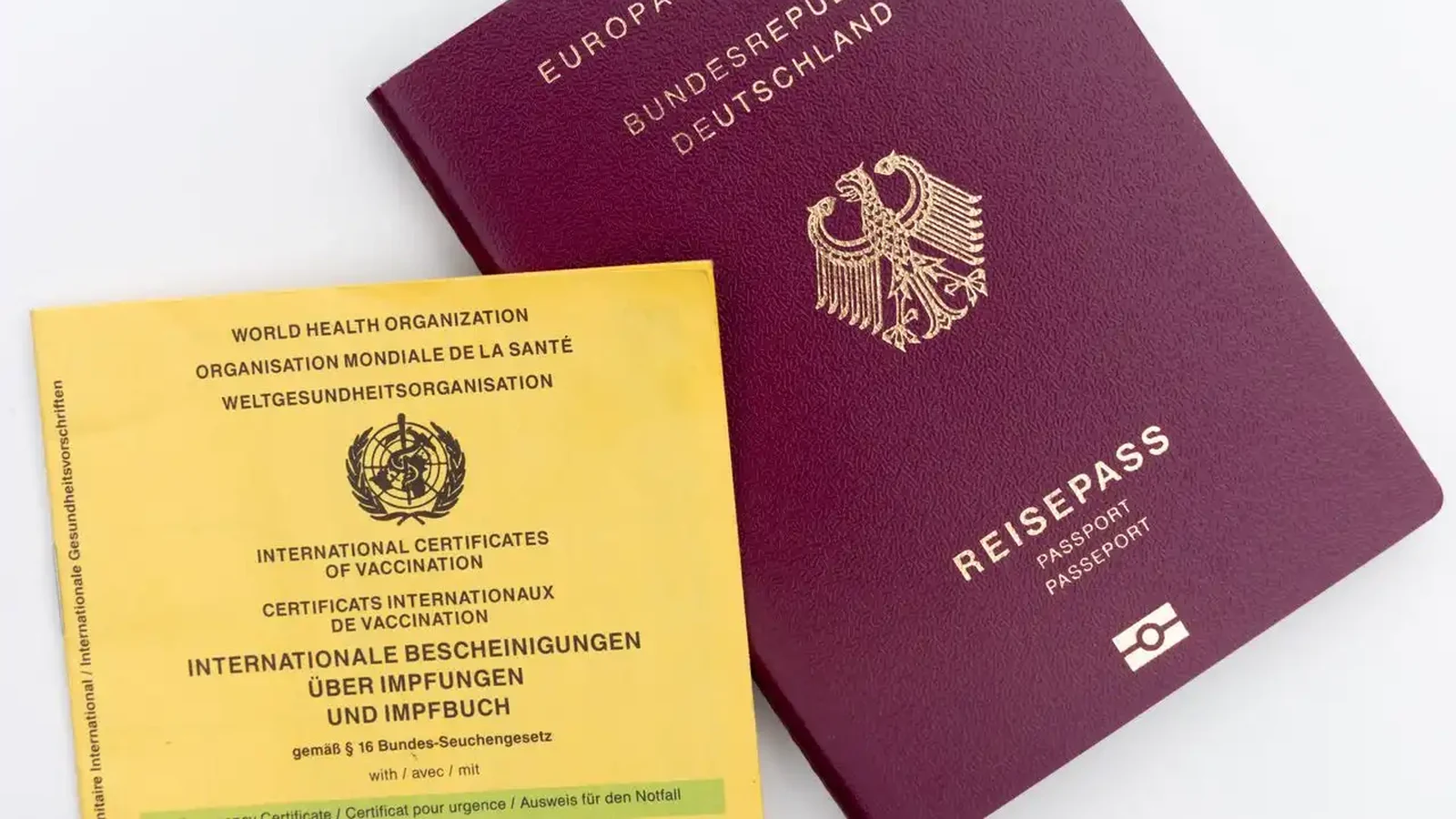
The first is a legal one. Under the International Health Regulations, a country is allowed to insist on proof of yellow fever vaccination as a condition of entry. That proof is the International Certificate of Vaccination or Prophylaxis, usually shortened to ICVP and often called the yellow card or the yellow book. The country is not protecting you when it asks for this. It is protecting itself, because it has the mosquito that spreads yellow fever and does not want an infected traveller arriving and starting an outbreak.
The second question is a medical one. Is there yellow fever where you are actually going, and would the vaccine protect you? That answer comes from the risk in the country, not from its border policy.
Because the two questions are separate, all four combinations exist. Ghana requires a certificate from everyone and has yellow fever, so both answers are yes. Brazil has yellow fever across large parts of the country but asks nobody for a certificate on arrival, so the vaccine is strongly advised and the paperwork is not required. Tanzania is the mirror image: it asks for a certificate from anyone who has come through a risk country, yet the vaccine is not generally recommended for Tanzania itself. And most of Europe is a no to both.
Getting this the wrong way round costs people either a wasted appointment or a ruined trip, which is why we work through it properly rather than reading you a list.
Which countries require a yellow fever certificate?
The table below sets out the position for destinations our customers travel to most often, and it deliberately keeps the two questions in separate columns. Read across, not down: a yes in the middle column tells you what the border will ask for, and a yes in the last column tells you what the vaccine would do for your health.
| Destination | Certificate required on entry? | Vaccine recommended? |
|---|---|---|
| Ghana | Yes, from all travellers aged 9 months and over, whichever country you have arrived from | Yes, from 9 months of age. There is a risk of yellow fever throughout the country |
| Uganda | Yes, from all travellers aged 1 year and over, whichever country you have arrived from | Yes, from 9 months of age. There is a risk of yellow fever throughout the country |
| Kenya | Only from travellers over 1 year old arriving from a country with a risk of yellow fever | Yes for most areas, including the game reserves, from 9 months of age. Not generally advised for Nairobi or Mombasa city |
| Tanzania | Only from travellers over 1 year old arriving from a risk country, or transiting more than 12 hours through an airport in one | No. There is only a low potential for exposure, so it is not generally recommended for Tanzania itself |
| Brazil | No. There is no certificate requirement under the International Health Regulations | Yes for many states from 9 months of age, including Amazonas, Acre, Rio de Janeiro and São Paulo, but not for places such as Fortaleza and Recife |
| India | Only from travellers aged 9 months and over arriving within 6 days of leaving an area with a risk of yellow fever | No. There is no yellow fever in India |
| Thailand | Only from travellers arriving from a risk country, or transiting more than 12 hours through an airport in one | No. There is no yellow fever in Thailand |
| South Africa | Only from travellers over 1 year old arriving from a risk country, or transiting more than 12 hours through an airport in one | No. There is no yellow fever in South Africa |
Please treat that table as a way of understanding the pattern rather than as your final answer. Country certificate requirements change, sometimes at short notice and sometimes in the middle of an outbreak, and they can be enforced far more strictly than the wording suggests. Do not rely on this article, on a forum post, or on what happened when a relative flew out three years ago. The current position for every country is published by the National Travel Health Network and Centre on TravelHealthPro, which is the UK reference source, and we check it for your exact itinerary at the appointment and again close to your travel date if there is a long gap.
One more thing the table cannot show. Requirements attach to countries, but risk attaches to regions. Brazil is the clearest example: the vaccine is advised for the Amazon states and for much of the south east, and not advised for parts of the north east coast. Kenya works the same way, with the game reserves treated differently from central Nairobi. So the honest answer to whether you need it usually depends on which towns you are visiting, not simply on which flag is on your boarding pass.
Arriving from or transiting a risk country
Now for the rule that catches out more travellers than any other, because it applies to countries where yellow fever does not exist at all.
India, Thailand and South Africa have no yellow fever. None of them recommends the vaccine for your health. All three will still ask for a certificate if you have arrived from, or passed through, a country where yellow fever occurs. India words it as arriving within six days of leaving a risk area. Thailand and South Africa word it as arriving from a risk country, or transiting for more than twelve hours through an airport in one.
The transit trap on multi-stop journeys
A country with no yellow fever of its own can still demand a certificate purely because of where you have been. If your route takes you through Nairobi, Addis Ababa, Lagos, Accra or a South American hub on the way to somewhere else, the country at the far end may treat you as arriving from a risk country even though you never left the terminal.
Without a valid certificate, border officials can refuse you entry, hold you in quarantine, vaccinate you on the spot, or fine you. That is not a scare story; it is what the International Health Regulations permit them to do, and airlines can decline to board you before you ever get there. It is also entirely avoidable, because the certificate has to be issued ten days before it counts anyway.
So tell us every leg of the journey, including stopovers you think are too short to matter and connections you have not booked yet. The final destination on its own is not enough information to advise you safely.
The thresholds do vary between countries, which is exactly why the detail matters. Some exempt passengers who stay airside; some do not. Some count a transit of any length; most use the twelve-hour figure. Some, such as India, run the clock from when you left the risk area rather than from the transit itself. If your route is complicated, bring the flight numbers rather than a summary.
How long is a yellow fever certificate valid?
There are two dates that matter, and they are often confused with each other.
The first is when the certificate starts working. An ICVP becomes valid ten days after the date of your first dose. Not the day you had it, and not the day the pharmacist signed the book. Ten full days. If you fly on day nine you effectively have no certificate, however neatly it is filled in, so the vaccination has to be planned backwards from your departure date. This is the main reason we ask people to come in at least four to six weeks before travelling, and it is doubly true if other vaccines need spacing around it.
The second is when it stops working, and the good news is that it does not. Since 11 July 2016 the certificate has been valid for the life of the person vaccinated. That change applies to older certificates too. If yours was printed with a ten-year expiry date in 2011 and that date has long passed, it is still valid under the International Health Regulations and should not be altered, crossed out or re-dated. Bring it with you rather than assuming you need to start again. We see plenty of people who have paid for a repeat dose they did not need.
A certificate is only as good as the way it was completed, though, and small errors do get certificates rejected at borders. It must carry your name exactly as it appears in your passport along with your passport details, the name of the vaccine, the date in full, the manufacturer and batch number, the signature and professional status of the clinician who gave it, and the official stamp of the registered centre. A missing stamp or a date written as 01/08 rather than in full is enough to cause an argument at immigration. Check it before you leave the building, and keep it with your passport rather than in your suitcase.
Lost it? A replacement can normally be issued from the clinical records of the centre that vaccinated you, and the replacement carries lifetime validity even if the original did not. Separately, while the certificate lasts for life, a small number of people — including some who were vaccinated while pregnant or while their immune system was suppressed — may be advised to have a second dose for their own protection. That is a clinical judgement about immunity, not a paperwork problem.
Who cannot have the vaccine, and exemption letters
Yellow fever vaccine is a live vaccine, which is what makes it both very effective and unsuitable for some people. It is not given to babies under nine months old. It is avoided in pregnancy and while breastfeeding, and it is contraindicated for people whose immune system is suppressed, whether by a condition or by medication, for people with a disorder of the thymus gland or who have had the thymus removed, and for people with a severe allergy to eggs. A first dose from the age of 60 carries a higher risk of rare but serious reactions, so it needs a proper risk discussion rather than a routine booking, and for a low-risk destination the answer is often no.
None of that is something to work out for yourself from a website. It is what the pre-vaccination risk assessment is for, and it is one of the reasons the vaccine may only be given at a registered centre. The NHS yellow fever vaccine page sets out the same criteria in plain terms if you want to read ahead.
So what happens if a country requires a certificate and you medically cannot have the vaccine? A registered centre can issue a Medical Letter of Exemption. It is completed on the template in the ICVP booklet or on the centre's headed paper, stamped, and written for the current trip only, and it explains to border officials why you have not been vaccinated. The clinician who carried out your risk assessment is the right person to write it.
Here is the part we would rather you heard from us than at an airport desk. An exemption letter is not a right of entry. NaTHNaC's own guidance is that a letter should be taken into consideration by the authorities on arrival, but that where there is a certificate requirement it is not a guarantee of entry into the country. Officials may accept it, and usually do, but they are not obliged to. If you are in that position, contact the embassy or high commission of the country you are visiting before you book anything you cannot get back, and think hard about the underlying question too: if a country requires a certificate because it has yellow fever, and you cannot be protected against it, rigorous mosquito bite avoidance becomes essential rather than optional, and sometimes changing the itinerary is the sensible answer.
Getting your yellow fever certificate in Harrow
Yellow fever vaccine and the certificate that goes with it can only be given at a registered Yellow Fever Vaccination Centre. Your usual chemist almost certainly is not one, and neither are most GP surgeries. Garner Chemist is, which means we can carry out the risk assessment, give the vaccine and issue and stamp your ICVP in the same appointment rather than sending you across London for it.
You will find us at 160 Pinner Road, Harrow HA1 4JJ, open Monday to Friday from 9am to 6pm and on Saturday from 9am to 1pm, and we are closed on Sunday. We are a few minutes from Harrow town centre and an easy run along Pinner Road from Pinner itself, and we see a steady stream of people who would otherwise be hunting for a registered centre in Northwood or Ruislip. You do not need to be registered with a particular GP surgery, and you refer yourself — just ring us on 020 8863 6338.
Bring your full itinerary with stopovers and flight times, your passport for the certificate details, and any vaccination records you already hold, including old yellow books from previous trips even if they look expired. If you are travelling as a family, book everyone together so we can assess ages and medical histories in one go rather than discovering a problem the week before departure.
Yellow fever is rarely the only thing on the list, so we will look at the rest of your trip at the same time. Our travel clinic page explains how the appointment runs, and our travel vaccinations checklist covers what else tends to come up by destination, from hepatitis A and typhoid to antimalarial tablets and the meningitis ACWY requirement for Hajj and Umrah.
Last word, and we mean it. Nothing in this article is a substitute for checking your own destinations close to your travel date. Requirements change, outbreaks change them faster, and the only version that counts is the one in force on the day you land. Come and talk to us with your itinerary in hand and we will check it properly.
Frequently asked questions
Where our patients travel from
We are at 160 Pinner Road, Harrow HA1 4JJ. Patients come to us for yellow fever certificate requirements from across north-west London and the surrounding HA postcodes:
- Harrow town centre (HA1) — about a 15-minute walk or a short bus ride from Harrow town centre. Near St Ann's Shopping Centre and St George's Shopping Centre.
- Pinner (HA5) — straight down Pinner Road from Pinner, roughly a 10-minute drive. Near Pinner station and Pinner High Street.
- Northwood (HA6) — about 15 minutes from Northwood. Near Northwood station and Northwood Hills.
- Ruislip (HA4) — roughly 15 minutes from Ruislip along the A404. Near Ruislip station and Ruislip Manor.
About the author
Poonam Pankhania — Superintendent Pharmacist & Independent Prescriber
Poonam Pankhania is the Superintendent Pharmacist at Garner Chemist on Pinner Road, Harrow, and an independent prescriber. She leads the pharmacy's NHS Pharmacy First, travel health and ear care services.
More about our teamRelated health advice

Travel Vaccinations Checklist: Which Vaccines Do You Need, By Destination
A destination-by-destination checklist of which travel vaccines you need, how far ahead to book, and which are free on the NHS.