
Written by Poonam Pankhania, Superintendent Pharmacist & Independent Prescriber
Medically reviewed by Poonam Pankhania, Superintendent Pharmacist & Independent Prescriber (GPhC 2068026) — last reviewed 28 October 2026
9 min read
What services can a pharmacy provide? Every NHS community pharmacy in England dispenses prescriptions, gives advice on illness and medicines, and takes back unwanted medicines. Most also offer NHS clinical services such as Pharmacy First, contraception, blood pressure checks and vaccinations, and many add private services like travel jabs, which they charge for.
What services can a pharmacy provide?
Most people use a pharmacy for two things: collecting a prescription and buying something for a cold. That is a fraction of what happens behind the counter. A community pharmacy is the most visited part of the NHS, and over the last few years it has taken on work that used to need a GP appointment.
The easiest way to make sense of it is to know that pharmacy services come in layers. The NHS contract that pharmacies in England work under, the Community Pharmacy Contractual Framework, sorts them like this:
- Essential services are the baseline. Every pharmacy with an NHS contract must provide them, so you can rely on them anywhere.
- Advanced services are national NHS services that a pharmacy chooses to sign up to. Pharmacy First, the contraception service and blood pressure checks sit here. Most pharmacies offer most of them, but not every pharmacy offers every one.
- Enhanced and local services are commissioned nationally or by the local NHS for particular needs, such as COVID-19 vaccination, and vary from area to area.
- Private services are outside the NHS altogether. The pharmacy decides what to offer and sets the price.
You do not need to remember the labels. What matters is the practical difference: the first layer is guaranteed, the middle two are free but vary between pharmacies, and the last one costs money. The rest of this guide goes through each in turn.
Services every NHS pharmacy provides
These are the services you can walk into any NHS pharmacy in England and expect. None of them needs an appointment, and you do not have to be registered with the pharmacy or live nearby.
- Dispensing. Supplying NHS prescriptions, with a pharmacist checking each one against your other medicines and advising you on how to take it. Most now arrive through the Electronic Prescription Service, which our guide to how EPS works explains.
- Repeat dispensing. For stable, long-term medicines, a prescriber can sign up to a year of repeats in one go, released to the pharmacy at set intervals.
- Advice and self-care. Help with coughs, colds, sore throats, aches and pains, and guidance on which over-the-counter treatment suits you, if any.
- Signposting. If a pharmacist cannot help, they will tell you who can, whether that is your GP, a sexual health clinic, a dentist or NHS 111.
- Disposal of unwanted medicines. Out-of-date or leftover medicines should come back to a pharmacy, not go in the bin or down the toilet.
- Discharge Medicines Service. When a hospital changes your medicines and refers you on, your pharmacy checks that what you receive afterwards matches what the hospital intended.
- Public health campaigns. Each year pharmacies run national campaigns on topics such as antibiotic use, vaccination and healthy living.
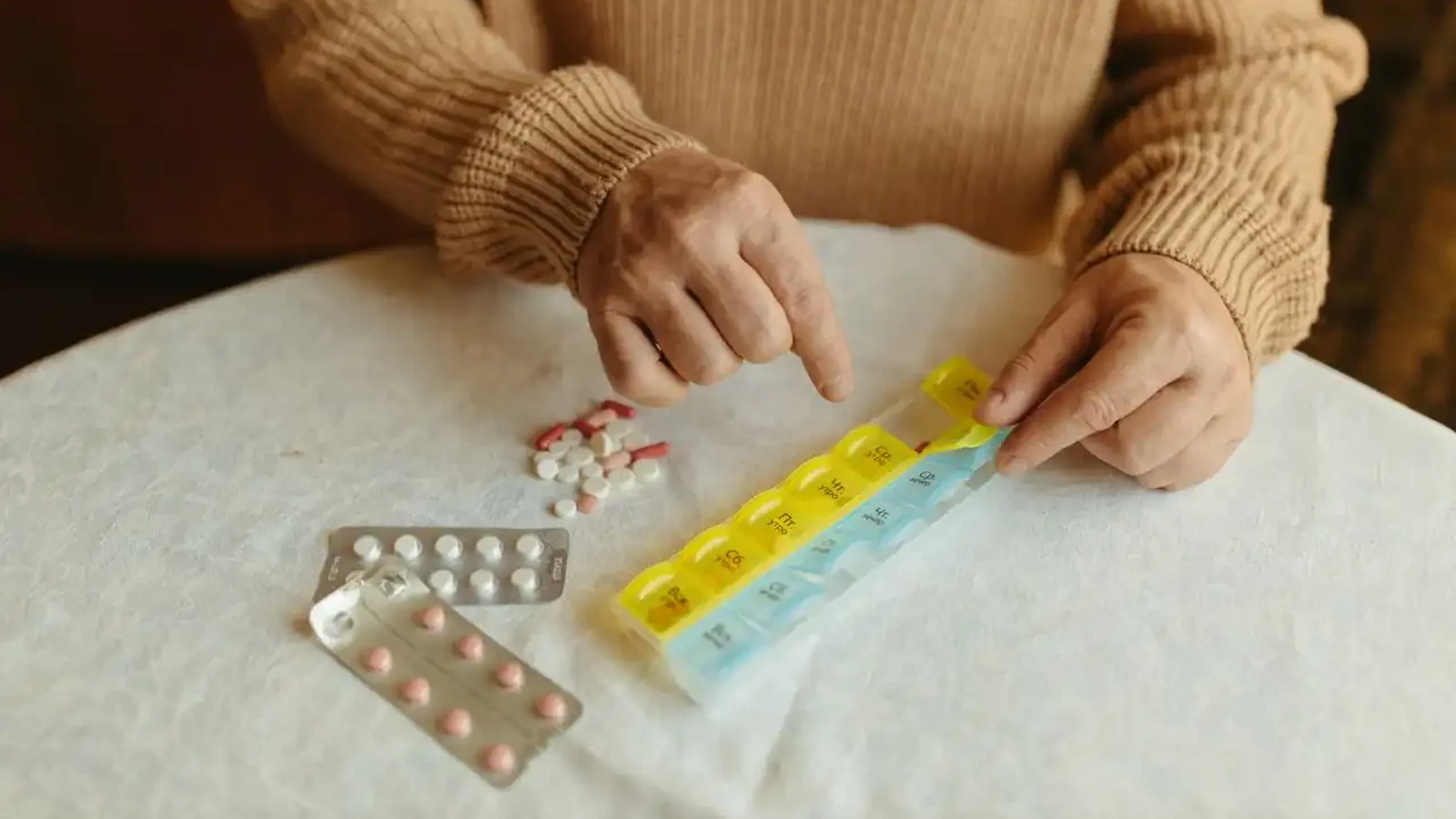
Many people underuse the advice part. You can ask a pharmacist about side effects, about whether two medicines are safe together, or about how to manage a complicated daily routine of tablets, and it costs nothing. If you take several medicines at different times of day, ask whether the pharmacy can supply them in blister packs sorted by day and time.
NHS clinical services, free at most pharmacies
This is the layer that has grown fastest, and the one most people do not know about. These services are free on the NHS, although any medicine supplied may carry the usual prescription charge unless you are exempt.
Pharmacy First
A pharmacist can assess and, where appropriate, supply prescription-only treatment for seven common conditions without a GP appointment: sinusitis, sore throat, earache, infected insect bites, impetigo, shingles and uncomplicated urinary tract infections in women. Each has its own age range, which our guide to Pharmacy First sets out.
Contraception
Through the NHS Pharmacy Contraception Service, a pharmacist can start you on the contraceptive pill or continue a supply you already have, with no GP appointment. Since 29 October 2025 the same service has included free emergency contraception, so you no longer have to buy the morning-after pill at a pharmacy that offers it.
Blood pressure checks
Adults aged 40 and over who have not been diagnosed with high blood pressure can have a free check, and some will be offered a monitor to wear at home for 24 hours to confirm the result. Our guide to blood pressure numbers explains what the reading means.
Support when you start a new medicine
The New Medicine Service gives you follow-up conversations with a pharmacist in the weeks after you start a medicine for one of a list of long-term conditions, such as high blood pressure, asthma, type 2 diabetes or high cholesterol. Depression was added to the list for adults in October 2025.
Vaccinations
Many pharmacies give NHS flu and COVID-19 vaccinations each autumn to people who are eligible, and some take part in time-limited programmes. One running until 31 March 2027 offers the MenB vaccine to 17 and 18 year olds and to young people starting university or college for the first time.
Depending on the pharmacy, you may also find NHS stop smoking support after a hospital stay, help with stoma and other medical appliances, and lateral flow tests for people who qualify for COVID-19 treatments. These are less widely offered, so check before you travel.
Free does not mean every pharmacy offers it
NHS clinical services are free wherever they are offered, but pharmacies sign up to them individually. The NHS advice is simple: ask your local pharmacist which services they provide. The NHS guide to how pharmacies can help lists the services you may find, and the NHS website's pharmacy finder shows which ones a particular pharmacy offers.
Private pharmacy services
Private services fill the gaps the NHS does not cover, or cover only for certain groups. They are paid for, the price is set by each pharmacy, and they often need a booked appointment because a pharmacist has to set aside time in the consultation room.
Common examples include:
- Travel health, including vaccinations, antimalarial tablets and, at registered centres, yellow fever certificates.
- Ear wax removal by microsuction, which most GP practices no longer offer.
- Weight management consultations with ongoing support.
- Vaccines outside the NHS programme, such as chickenpox vaccination for adults and older children, or a flu jab for someone not eligible for the free one.
Prices vary a good deal, so compare like with like. Ask what the fee includes: the consultation, the vaccine or treatment itself, and any follow-up dose.
Community pharmacy services explained
Here is how the four layers compare at a glance.
| Type of service | Examples | Cost to you | Offered by |
|---|---|---|---|
| Essential NHS services | Dispensing, repeat dispensing, advice, signposting, medicine disposal, Discharge Medicines Service | Free, apart from the usual prescription charge on medicines | Every NHS pharmacy in England |
| Advanced NHS services | Pharmacy First, contraception including emergency contraception, blood pressure checks, New Medicine Service, flu vaccination | Free, though medicines under Pharmacy First carry the usual prescription charge unless you are exempt | Most pharmacies, each choosing which to provide |
| Enhanced and local NHS services | COVID-19 vaccination and services commissioned for local needs | Free | Pharmacies commissioned in your area |
| Private services | Travel vaccinations, ear wax removal, weight management, chickenpox vaccination | Paid; the pharmacy sets the price | Varies by pharmacy |
What a pharmacy cannot do
A broad list of services can make it sound as if a pharmacy replaces the GP. It does not. A community pharmacist cannot see your full GP record, order blood tests or scans, refer you to a specialist, change your repeat prescription or issue a fit note for work. Anything that needs an examination beyond what a consultation room allows, or that has gone on longer than expected, belongs with your GP.
Where exactly the line sits for common symptoms, and when to go to the GP, NHS 111 or 999 instead, is covered in our guide to what a pharmacist can treat.
How to check what a pharmacy offers
Because the middle layers vary, it is worth checking before you make a special trip, especially for a service that needs time in the consultation room. There are three quick ways:
- Ask at the counter or ring. This is still the fastest. Ask whether the service is running, whether you need to book, and whether the pharmacist who provides it is in that day.
- Use the NHS website. Searching for a pharmacy on nhs.uk shows its opening hours and the NHS services it has registered to provide.
- Look at the pharmacy's own website. Private services and their prices are usually listed there, along with how to book.
If a pharmacy does not offer what you need, ask where does. Pharmacists know which nearby pharmacies run which services and would rather point you to the right place than send you away empty-handed.
Services at Garner Chemist in Harrow
For anyone around Harrow town centre, in West Harrow or North Harrow, or over towards Rayners Lane, this is what you will find at our pharmacy on Pinner Road. You can see everything in one place on our home page.
On the NHS side, we dispense NHS and private prescriptions and can deliver them, treat the seven Pharmacy First conditions without a GP appointment, and run the NHS contraception service, including free emergency contraception. Adults aged 40 and over can have a free blood pressure check, and if you have just been prescribed a medicine for a long-term condition, our New Medicine Service follows up with you over the first few weeks.
For vaccinations, we give NHS flu jabs and COVID-19 vaccinations in season, and the free MenB vaccination for eligible students and school leavers until the programme closes.
Our private services are a travel clinic, microsuction ear wax removal, a weight loss clinic and chickenpox vaccination. Each service page shows our current price, or tells you to contact us for it.
We are Garner Chemist, at 160 Pinner Road, Harrow HA1 4JJ, open Monday to Friday from 9am to 6pm and Saturday from 9am to 1pm, and closed on Sunday. If you are not sure whether we offer something, call us on 020 8863 6338 and ask. You can also find us and get in touch online.
Frequently asked questions
Where our patients travel from
We are at 160 Pinner Road, Harrow HA1 4JJ. Patients come to us for what services can a pharmacy provide from across north-west London and the surrounding HA postcodes:
- Harrow town centre (HA1) — about a 15-minute walk or a short bus ride from Harrow town centre. Near St Ann's Shopping Centre and St George's Shopping Centre.
- West Harrow (HA1, HA2) — a few minutes from West Harrow. Near West Harrow station and West Harrow Recreation Ground.
- North Harrow (HA1, HA2) — on Pinner Road between North Harrow and Harrow town centre. Near North Harrow station and Pinner Road.
- Rayners Lane (HA2, HA5) — around 10 minutes from Rayners Lane. Near Rayners Lane station and Alexandra Avenue.
About the author
Poonam Pankhania — Superintendent Pharmacist & Independent Prescriber
Poonam Pankhania is the Superintendent Pharmacist at Garner Chemist on Pinner Road, Harrow, and an independent prescriber. She leads the pharmacy's NHS Pharmacy First, travel health and ear care services.
More about our teamRelated health advice
What Can a Pharmacist Treat? A Plain Guide to Where to Go First
Most people either think their problem is too small for a pharmacy or too big for one. This is the whole range of what a community pharmacist can deal with, where the line sits, and when to go elsewhere.
What Is Pharmacy First? The 7 Conditions Your Pharmacist Can Treat Without Seeing a GP
Pharmacy First lets your pharmacist assess and treat seven common conditions on the NHS — no GP appointment, no referral, often same day.