
Written by Poonam Pankhania, Superintendent Pharmacist & Independent Prescriber
Medically reviewed by Poonam Pankhania, Superintendent Pharmacist & Independent Prescriber (GPhC 2068026) — last reviewed 14 October 2026
9 min read
Who can get a COVID booster? In England the free NHS COVID-19 vaccine is now offered only to adults aged 75 and over, residents of care homes for older adults, and anyone aged six months and over with a weakened immune system. It is given in seasonal campaigns, at least three months after your last dose.
Who can get a COVID booster this autumn
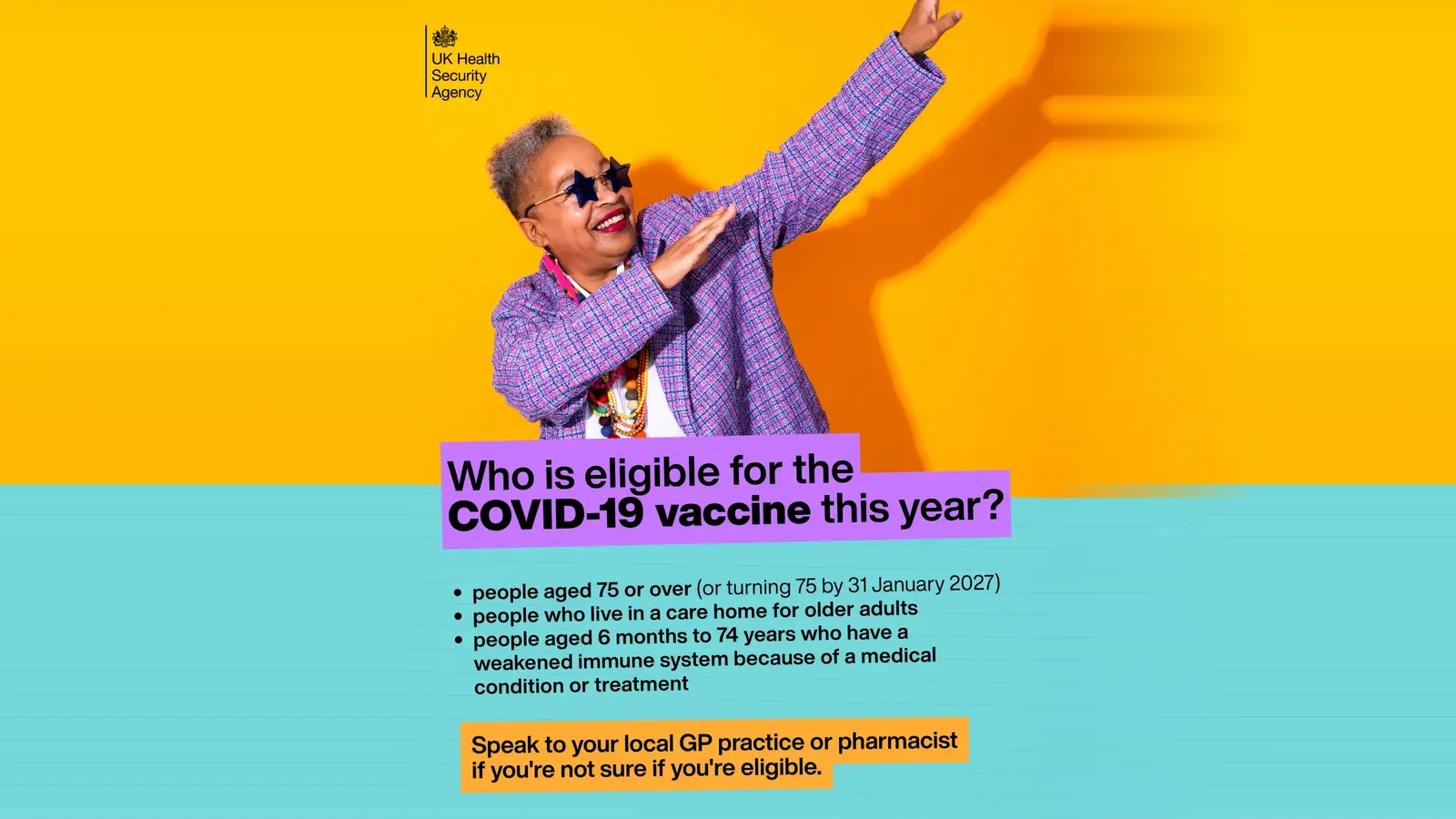
Most people still call it the COVID booster, although the NHS now simply calls it the seasonal COVID-19 vaccine. Whatever the name, the free offer in the autumn and winter 2026 campaign covers three groups, and only three:
- Adults aged 75 and over, including anyone who will turn 75 by 31 January 2027. If your 75th birthday falls in December or January, you do not need to wait for it.
- Residents of care homes for older adults, who are usually vaccinated in the home itself rather than having to travel.
- Anyone aged six months and over who is immunosuppressed, meaning their immune system is weakened by a health condition or by treatment. That group is explained in more detail below, because it is the one people are least sure about.
That is the same list as the spring 2025, autumn 2025 and spring 2026 campaigns. The government accepted the advice of the Joint Committee on Vaccination and Immunisation (JCVI) in March 2026, and the NHS COVID-19 vaccine page sets out the current criteria. The UK Health Security Agency leaflet for this autumn says the same thing in plain terms: the programme is targeted at the people at highest risk of complications, and its main job is to reduce the chance of being admitted to hospital with COVID-19 over the winter.
Who is no longer eligible, and why it changed
This is where most of the confusion comes from. During the pandemic almost every adult was offered vaccination, and for several years afterwards the autumn offer still reached everyone aged 65 and over, people with long-term conditions, and frontline health and social care workers. None of those groups qualifies on that basis any more.
The reason is not that COVID-19 has gone away. It is that most people now have layers of protection from earlier vaccines and infections, so an extra dose prevents far fewer hospital admissions in a healthy 68-year-old than in someone of 85 or someone having chemotherapy. JCVI weighs that benefit against the cost of each campaign, and it has concentrated the offer where the benefit is clearest.
| Group | Free NHS COVID vaccine? | Free NHS flu jab? |
|---|---|---|
| Aged 75 and over, or turning 75 by 31 January 2027 | Yes | Yes |
| Living in a care home for older adults | Yes | Yes |
| Aged six months or over with a weakened immune system | Yes | Yes |
| Aged 65 to 74, with a healthy immune system | No | Yes, everyone 65 and over qualifies |
| Long-term condition such as asthma, diabetes or heart disease, but not immunosuppressed | No | Yes, if the condition is on the NHS list |
| Pregnant | Only if you qualify for another reason | Yes, at any stage of pregnancy |
| Frontline health or social care worker | Only if you qualify for another reason | Usually, through your employer or the NHS |
The gap between the two columns is the part worth noticing. Plenty of people who are no longer offered a COVID vaccine are still entitled to a free flu jab, and should have it. Our guide to who is eligible for a free NHS flu jab covers that list in full.
Being pregnant does not make you eligible for the COVID vaccine by itself. If you do qualify on other grounds, for example because you are immunosuppressed, the NHS advises that the vaccine can be given during pregnancy and while breastfeeding.
What counts as a weakened immune system
The immunosuppressed group is defined in the UKHSA Green Book, the national rulebook for vaccination, and the NHS gives a summary of who it includes. Broadly, it covers people who:
- have, or are being treated for, a blood cancer such as leukaemia or lymphoma
- have had an organ, bone marrow or stem cell transplant
- are living with HIV
- have a severe inherited immune condition
- are having, or recently had, chemotherapy, radiotherapy or a biological therapy that lowers immunity
- take long-term immunosuppressive medicine, for example for lupus, rheumatoid arthritis or inflammatory bowel disease
- take steroid tablets at a dose high enough to affect the immune system
That is a summary, not the full definition, and it is the area where it is easiest to be unsure. Whether a steroid dose counts, or whether a particular arthritis medicine is strong enough, depends on the detail. If you think you might be in this group, ask your GP surgery, your hospital specialist, or a pharmacist. Bring a list of what you take, or your repeat prescription slip, and we can usually tell you quickly whether it is worth booking.
Some people with a severely weakened immune system are advised to have additional doses outside the normal campaign. That is decided by their GP or specialist around their treatment, not by the national booking system, so follow the advice your own team gives you.
How the seasonal COVID programme works
The COVID-19 vaccine is no longer available all year round on the NHS. It is offered in campaigns, usually one in spring and one in autumn and early winter, and the national booking service closes in between. If you try to book in July, there is nothing to book, which is normal rather than a fault.
Each campaign goes through the same steps. JCVI reviews the evidence and advises which groups should be offered vaccination, the government decides whether to accept that advice, and NHS England then runs the campaign through GP surgeries, community pharmacies, care homes and vaccination sites. Because the decision is made fresh each time, the list can change from one season to the next, which is why it is worth checking when a campaign opens rather than relying on what applied last year.
For autumn and winter 2026, the details are:
- Bookings opened in early September, ahead of vaccinations starting.
- Vaccinations run from 1 October 2026 to 31 January 2027. The UKHSA leaflet says most people should expect an appointment between October and December, so protection is in place before the worst of winter.
- Online booking closes on 30 January 2027, the day before the campaign ends.
Since spring 2025 the spring and autumn campaigns have both covered the same three groups, because those are the people whose protection fades fastest and who gain most from a top-up twice a year. JCVI's statement covering this autumn also looked ahead to spring 2027 and judged it appropriate to offer the same groups again, though each campaign is still confirmed in its own right.
You do not need to wait for an invitation
If you are eligible, you can book yourself in as soon as the campaign is open. You may get a letter, text or NHS App message, but many people never do, and not hearing from anyone does not mean you have been left out.
Timing and booking your COVID vaccine
You should have your seasonal dose at least three months after your previous COVID-19 vaccine, whichever brand that was. If you had a spring dose in May, for example, you can have your autumn dose from August onwards, which in practice means as soon as the campaign starts.
If you have had COVID-19 recently, there is no need to wait once you have recovered. If you are unwell, or might be infectious, wait until you feel better and do not attend an appointment in the meantime. If you missed earlier doses, or have never been vaccinated at all, you can still have this one, and you do not need to catch up on the ones you missed first.
NHS COVID-19 appointments are booked through the national system. You can:
- book online through the NHS website
- book in the NHS App
- call 119 free of charge, where interpreters are available
- attend a walk-in COVID-19 vaccination site where one is running
Community pharmacies that deliver the NHS service, including ours, take their COVID-19 appointments through that same booking system. If you are due a flu jab as well, you can usually have both at the same appointment, one in each arm, which saves a second trip.
Side effects and what happens afterwards
The vaccines used this autumn are updated versions of earlier COVID-19 vaccines. The common side effects are the same as they have always been: a sore, heavy arm where the injection went, usually worst a day or two later, tiredness, a headache, and general aches or mild flu-like symptoms. Resting and taking paracetamol, following the dose on the packet, usually helps, and symptoms normally settle within a week.
Inflammation of the heart, called myocarditis or pericarditis, has been reported very rarely, mostly in younger men and within a few days of vaccination. Get medical advice urgently if you develop chest pain, shortness of breath, or a fast, fluttering or pounding heartbeat after your vaccine. If you have had a severe reaction to a previous COVID-19 vaccine, talk to your doctor before having another.
The routine 15-minute wait after a COVID-19 vaccine is no longer required for most people, so you can usually leave straight away. You will still be asked to wait if you have a history of significant allergy, and nobody should drive for 15 minutes afterwards, because fainting can follow any injection. Suspected side effects can be reported through the MHRA Yellow Card scheme.
If you are not eligible on the NHS
If you fall outside the three groups, you will not be able to book an NHS appointment, and a pharmacy cannot give NHS vaccine to someone who is not eligible. Since 2024 a private COVID-19 vaccine market has existed in the UK, using vaccine bought separately from the NHS programme. Availability varies from season to season, so ask us what we can currently arrange and we will explain what is involved, including the cost, before you commit to anything.
For most healthy adults under 75, the more useful step this winter is making sure you have everything you are already entitled to. That may be a free flu jab, and it may be knowing where to go when you do get ill. Our post on what a pharmacist can treat explains how to get help for winter coughs, sore throats and sinus problems without waiting for a GP appointment.
Getting your COVID vaccine in Harrow
Garner Chemist at 160 Pinner Road takes part in the NHS COVID-19 and flu vaccination service, and our COVID vaccinations page explains how appointments with us work. Many of the people we vaccinate each autumn are in their late seventies and eighties, coming in from West Harrow or along the road from Rayners Lane, and a good number are family members booking on behalf of a parent in Pinner or Harrow Weald. If that is you, the parent needs to be eligible, but you are welcome to make the booking and come with them.
If getting to us is the hard part, that is worth mentioning too. For people who are housebound, vaccination is normally arranged by the GP surgery, and our guide to getting prescriptions delivered covers the other ways we can help without you leaving home.
We are open Monday to Friday 9am to 6pm and Saturday 9am to 1pm, and closed on Sunday. If you are not sure whether you qualify, ring us on 020 8863 6338 or use the contact page, and we will check before you book.
Frequently asked questions
Where our patients travel from
We are at 160 Pinner Road, Harrow HA1 4JJ. Patients come to us for who can get a covid booster from across north-west London and the surrounding HA postcodes:
- West Harrow (HA1, HA2) — a few minutes from West Harrow. Near West Harrow station and West Harrow Recreation Ground.
- Rayners Lane (HA2, HA5) — around 10 minutes from Rayners Lane. Near Rayners Lane station and Alexandra Avenue.
- Pinner (HA5) — straight down Pinner Road from Pinner, roughly a 10-minute drive. Near Pinner station and Pinner High Street.
- Harrow Weald (HA3) — a short drive from Harrow Weald. Near Harrow & Wealdstone station and Harrow School.
About the author
Poonam Pankhania — Superintendent Pharmacist & Independent Prescriber
Poonam Pankhania is the Superintendent Pharmacist at Garner Chemist on Pinner Road, Harrow, and an independent prescriber. She leads the pharmacy's NHS Pharmacy First, travel health and ear care services.
More about our teamRelated health advice
Who Is Eligible for a Free Flu Jab? The Rules, and the Edge Cases That Catch People Out
Why the eligible list is rewritten every year, straight answers to the edge cases — turning 65 mid-season, a BMI just under 40, unregistered carers — and what to do if you do not qualify.

What Can a Pharmacist Treat? A Plain Guide to Where to Go First
Most people either think their problem is too small for a pharmacy or too big for one. This is the whole range of what a community pharmacist can deal with, where the line sits, and when to go elsewhere.