
Written by Poonam Pankhania, Superintendent Pharmacist & Independent Prescriber
Medically reviewed by Poonam Pankhania, Superintendent Pharmacist & Independent Prescriber (GPhC 2068026) — last reviewed 2 September 2026
9 min read
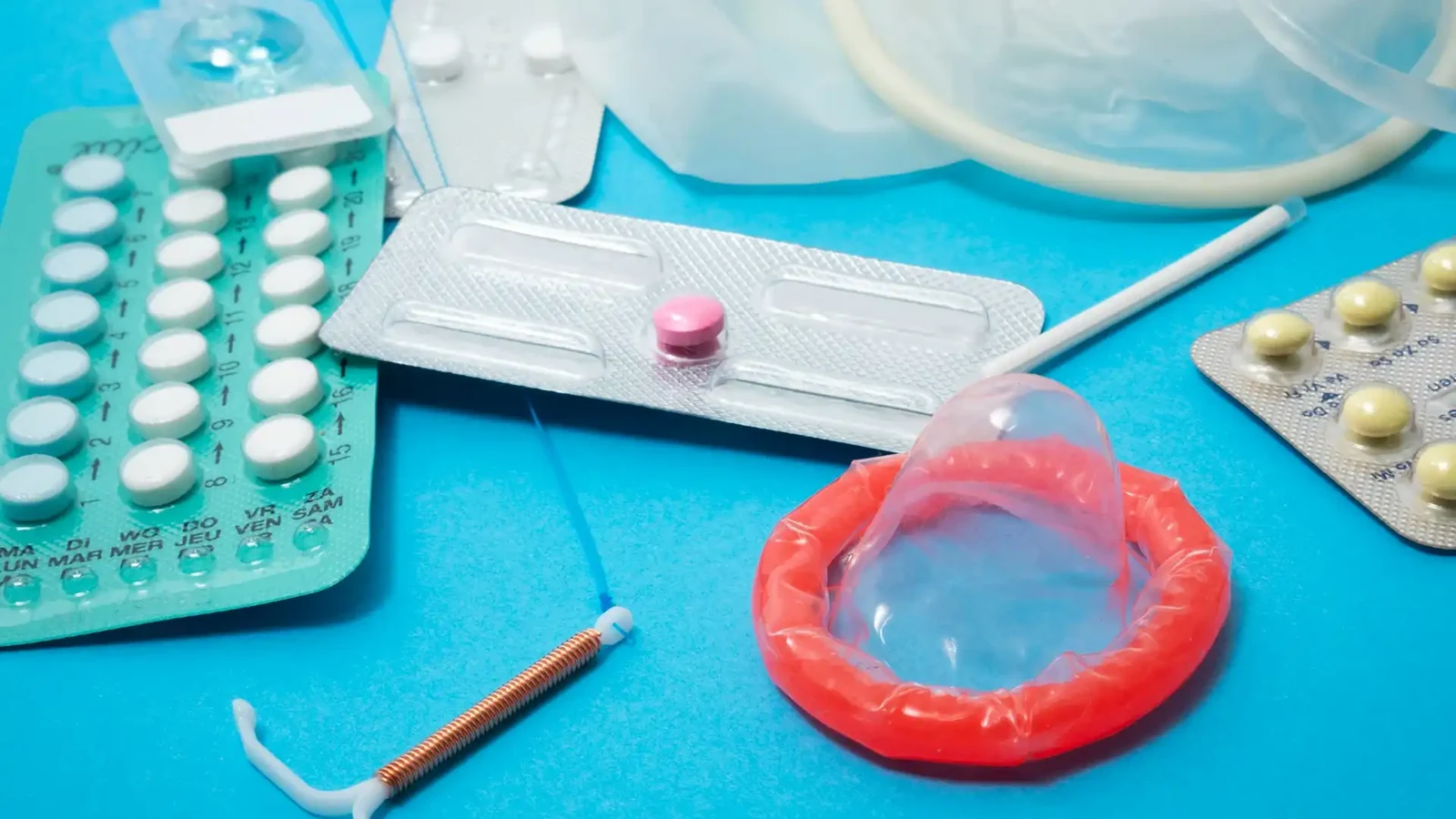
Ask about combined pill vs mini pill and the answer comes down to one hormone. The combined pill contains oestrogen and progestogen, and works mainly by stopping ovulation. The mini pill, or progestogen-only pill, contains progestogen alone, which makes it usable by people who cannot take oestrogen — but the timing rules are stricter.
Combined pill vs mini pill: how they differ
First, the thing that stops people asking at all. A contraception consultation here happens in our private consultation room with the door closed, not across the counter. Nobody in the shop hears it, and "I'd like to speak to the pharmacist" is enough to get you in there. It is confidential whatever your age and whatever your reasons. Our NHS contraception service page covers how the appointment itself runs.
Now the clinical part. Both are daily tablets, both are hormonal, and both are free on the NHS in England. That is roughly where the similarity ends. The combined pill contains an oestrogen and a progestogen. Its main job is to switch off ovulation, so no egg is released; it also thickens the mucus at the neck of the womb, making it harder for sperm to get through, and thins the womb lining.
The mini pill has no oestrogen at all, and it splits into two kinds that behave quite differently. Older, traditional progestogen-only pills — those containing levonorgestrel or norethisterone — work mostly through cervical mucus, and only switch off ovulation in around half of cycles. That is precisely why they must be taken so punctually. Newer pills containing desogestrel do reliably stop ovulation on top of the mucus effect, and that extra margin is what buys their more forgiving missed-pill window.
| Combined pill | Progestogen-only pill (mini pill) | |
|---|---|---|
| How it works | Oestrogen plus progestogen. Mainly stops the ovaries releasing an egg, and also thickens cervical mucus and thins the womb lining. | Progestogen only. Traditional types work mainly by thickening cervical mucus and stop ovulation in about half of cycles; desogestrel types reliably stop ovulation too. |
| Who it tends to suit | People with no oestrogen-related risks who want a predictable monthly bleed, or want to run packs together and skip bleeds. | People who cannot take oestrogen — migraine with aura, smokers aged 35 or over, a clot history, a higher BMI — and people breastfeeding. |
| Missed-pill window | A pill counts as missed once it is more than 24 hours late, so 48 hours or more since the last one. | More than 3 hours late for a traditional levonorgestrel or norethisterone pill; more than 12 hours late for a desogestrel pill. |
| Typical bleeding pattern | A regular, predictable withdrawal bleed in the pill-free week, or none at all if packs are run together. | Unpredictable. Periods may become lighter, more frequent, irregular, or stop altogether, and spotting between them is common. |
Effectiveness is one place they do not differ. The NHS puts both at over 99 per cent effective when taken correctly every time, and about 91 per cent in real-world use — roughly 9 in 100 people using either pill becoming pregnant over a year. That gap is not about the pills but about missed doses, sickness and the difficulty of taking something at the same time every day for years. If you already know a daily tablet is a struggle for you, say so, because it points towards a different sort of method altogether.
The combined pill: how it is taken and what it does
The traditional pattern is 21 days on, then a seven-day break, during which you usually bleed. Some packs hold 28 tablets, the last seven being dummies with no hormone, so the routine never stops.
That bleed is not a real period. It is a withdrawal bleed caused by the hormones dropping away, and it serves no medical purpose. Tailored regimens are therefore normal and perfectly acceptable: shorter breaks, fewer breaks, or running packs together with no break at all. If fewer bleeds appeal, ask. When you start matters too: begin within the first five days of your cycle and you are covered straight away; start at any other point and you need condoms for the first seven days, or nine for a few less common pills.
It also has effects beyond contraception, worth understanding rather than being sold. The NHS notes that for some people it improves period pain and other symptoms linked to periods, such as headaches, and bleeds are often lighter and more predictable. Some people find acne improves. None of that is guaranteed or universal — but if painful or heavy periods are part of your life, mention it, because it forms part of the discussion.
When the combined pill is not suitable
Migraine with aura is the critical one. Aura means warning symptoms before the headache — commonly zigzag lines, flashing lights or a blind spot in your vision, sometimes numbness or pins and needles, building over minutes and clearing within an hour. Migraine with aura roughly doubles the background risk of an ischaemic stroke on its own, and oestrogen-containing contraception raises that risk independently. Together they are classed under the UK Medical Eligibility Criteria as category 4 — an unacceptable health risk — at any age. That is the strongest category there is, and it applies even if the auras are infrequent. It does not rule out progestogen-only methods, which are not restricted in the same way.
Smoking from the age of 35. Below 35, smoking does not by itself rule the combined pill out. From 35 it does: 15 or more cigarettes a day is category 4, and fewer than 15 a day is category 3, where risks usually outweigh benefits.
Blood clots. A previous deep vein thrombosis or pulmonary embolism, or a known clotting disorder, rules it out. A clot in a close relative before 45 needs assessing rather than assuming. For context, the NHS puts the clot risk with combined hormonal contraception at up to 1 in 1,000 users — small, but the reason these questions get asked.
Weight. A BMI of 30 to 34 is category 2, meaning benefits generally still outweigh risks. A BMI of 35 or above is category 3, again mainly because of clot risk. That is why we weigh and measure rather than ask.
Also on the list: narrowed or blocked arteries or a previous stroke, heart disease or high blood pressure, breast cancer, gallbladder or bile duct problems, liver cancer or severe cirrhosis, and complications of diabetes. If you are breastfeeding, it is not started until at least six weeks after giving birth. None of this is a checklist to score yourself against at home — several criteria turn on how long ago and how severe, which is what the consultation is for.
The mini pill: fewer restrictions, tighter timing
Everything ruled out above is the reason the progestogen-only pill exists. With no oestrogen in it, the clot and stroke concerns that shape the combined pill's rules largely fall away, so it is usually open to people with migraine with aura, smokers aged 35 and over, people with a higher BMI or a clot history, and people breastfeeding, including in the weeks straight after birth.
The trade-off is precision and bleeding. It is taken every day with no break, at roughly the same time. Bleeding is the most common reason people stop it: periods may get lighter, more frequent, irregular or vanish entirely, and spotting in between is common. That is a known effect rather than a sign of anything wrong, but it can be genuinely annoying, and it is better known before you start than after. Acne, mood changes, weight changes and a change in sex drive are also reported. Fluid-filled sacs on the ovaries can develop; they usually cause no symptoms and settle on their own. The NHS describes a possible link with breast cancer while noting the evidence is limited.
One thing genuinely worth knowing, because many people do not: some progestogen-only pills can now be bought from a pharmacy in the UK without a prescription. Two desogestrel products were reclassified from prescription-only to pharmacy medicines in July 2021, after a safety review and two public consultations, and they are supplied following a consultation with the pharmacist rather than simply handed over. Before you reach for your card, ask: a pharmacist may also be able to supply the progestogen-only pill free without a prescription, and contraception is free in England. There is rarely a good reason to buy what you can get free at the same chemist counter.
Which contraceptive pill is right for me?
In practice the question tends to answer itself. If anything in that warning box applies to you, the mini pill is the realistic starting point and the conversation moves on quickly. If nothing does, both are genuinely open, and the deciding factors become everyday ones: whether you want a predictable monthly bleed or would rather have none, whether unpredictable spotting would bother you, whether heavy or painful periods are something you want help with, and how confident you are about taking a tablet within a narrow window every day. If that last one is the sticking point, say so — a method you never have to remember may serve you better, and we will tell you where those are fitted.
Your medicines matter too. Some, including certain epilepsy treatments and the herbal remedy St John's wort, can make hormonal contraception less effective, so bring a list of everything you take, prescribed or not.
We are Garner Chemist at 160 Pinner Road, Harrow HA1 4JJ, open Monday to Friday from 9am to 6pm and Saturday from 9am to 1pm, closed on Sunday. Pinner Road puts us a short walk from West Harrow and a straight run up from Rayners Lane, and far enough from the busy counters of Harrow town centre that people often prefer to have this conversation here. You need not be registered with a GP or live in Harrow, and you refer yourself.
Missed pill rules for each type
This is where the two types diverge most sharply, and where getting it wrong matters. The rules below are the standard UK ones, but the leaflet in your pack is specific to what you take, and if you are unsure at all, ring us on 020 8863 6338 or come in.
Combined pill. A pill only counts as missed once it is more than 24 hours late — 48 hours or more since your last one. Miss just one anywhere in the pack: take it as soon as you remember, even if that means two in a day, carry on as normal, and no extra protection is needed. Miss two or more in a row: take the most recent missed pill, carry on with the pack, and use condoms until you have taken seven pills in a row. Where you are in the pack then decides what else is needed — missed pills in the last week usually mean going straight into the next pack with no break, and missed pills around the start of a pack can mean emergency contraception if you have had sex recently.
Mini pill. The window depends entirely on which type you take, and this is the most misunderstood fact about it. A traditional pill containing levonorgestrel or norethisterone counts as missed once it is more than 3 hours late. A desogestrel pill counts as missed once it is more than 12 hours late — four times the leeway, because it suppresses ovulation reliably and the older ones do not. A newer type containing drospirenone has a different window again, at 24 hours, with its own advice, so check its leaflet. In each case: take one pill as soon as you remember, carry on at your usual time, and use condoms for the next 48 hours. If you have had sex meanwhile, emergency contraception may be needed.
Two things that are not technically missed pills but behave like them: being sick within a couple of hours of taking one, and severe diarrhoea. Either can mean the dose never got absorbed. If emergency contraception does turn out to be needed, we supply it free with no appointment, and sooner always beats later.
Contraceptive pill side effects, and switching
Most side effects from either pill are unremarkable and settle. With the combined pill, bleeding between periods is common in the first few months, along with headaches, mood changes, feeling sick or dizzy, and sore breasts. The NHS is clear there is no evidence the pill causes weight gain or changes sex drive. A small number of people develop high blood pressure on it, which is one reason it is checked at the start and at reviews. On cancer the picture is mixed rather than alarming: the combined pill slightly increases the risk of breast and cervical cancer, returning to normal about ten years after stopping, and lowers the risk of womb, ovarian and bowel cancer. With either pill, your chance of getting pregnant returns to what it was within about a month of stopping.
Switching between the two is routine and we do it often: a new migraine pattern, someone turning 35 who still smokes, blood pressure creeping up, or spotting that has become intolerable. There is a right way to change over so you are not left unprotected in the gap, and it depends on the direction and on where you are in the current pack, so please do not improvise it. Bring your pack and anything else you take, and we will plan it.
Some things need attention rather than wait-and-see. Sudden severe headache, a new migraine aura when you have never had one, chest pain or breathlessness, or pain and swelling in one calf all mean urgent medical help, not a pharmacy appointment. Sudden weakness or numbness down one side, or difficulty speaking, is 999.
One last thing, plainly. Nothing in this article can tell you which pill is right for you, and it is not meant to. It is here so you arrive knowing what the two options are and what the questions will be about. The decision rests on your blood pressure, your BMI, your migraine history, your medicines and what you want from a method — and it belongs in a conversation with a pharmacist, a GP or a sexual health clinician, not in a comparison table. For the NHS's own overview of every method, see the NHS contraception guide. Then come and talk to us, and we will work through it properly.
Frequently asked questions
Where our patients travel from
We are at 160 Pinner Road, Harrow HA1 4JJ. Patients come to us for combined pill vs mini pill from across north-west London and the surrounding HA postcodes:
- Harrow town centre (HA1) — about a 15-minute walk or a short bus ride from Harrow town centre. Near St Ann's Shopping Centre and St George's Shopping Centre.
- West Harrow (HA1, HA2) — a few minutes from West Harrow. Near West Harrow station and West Harrow Recreation Ground.
- Rayners Lane (HA2, HA5) — around 10 minutes from Rayners Lane. Near Rayners Lane station and Alexandra Avenue.
About the author
Poonam Pankhania — Superintendent Pharmacist & Independent Prescriber
Poonam Pankhania is the Superintendent Pharmacist at Garner Chemist on Pinner Road, Harrow, and an independent prescriber. She leads the pharmacy's NHS Pharmacy First, travel health and ear care services.
More about our teamRelated health advice
What Is Pharmacy First? The 7 Conditions Your Pharmacist Can Treat Without Seeing a GP
Pharmacy First lets your pharmacist assess and treat seven common conditions on the NHS — no GP appointment, no referral, often same day.